
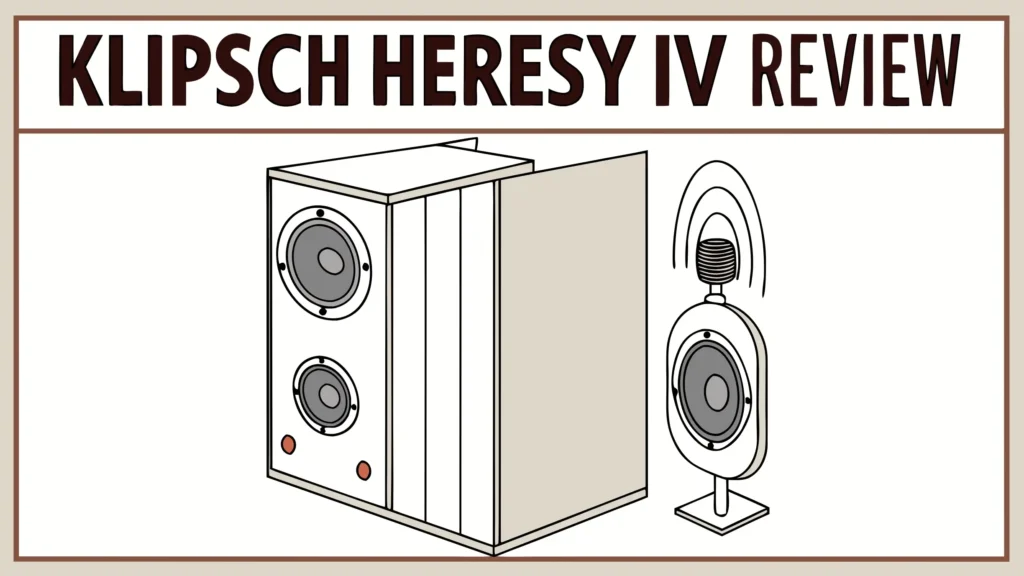
Klipsch Heresy IV Review: Do These Legends Still Deliver?
The Klipsch Heresy IV stands as a testament to decades of acoustic engineering excellence. This speaker combines classic heritage design with modern technology. It delivers sound that captures both the heart and mind of serious audio enthusiasts.
Many audiophiles wonder if the Heresy IV lives up to its legendary reputation. This speaker promises to deliver the famous Klipsch sound signature while addressing previous limitations. Our comprehensive review explores every aspect of this remarkable speaker system.
Key Takeaways
- Horn-loaded efficiency: The Heresy IV features a three-way horn-loaded design that delivers exceptional efficiency at 99dB sensitivity, requiring minimal amplifier power while producing room-filling sound
- Updated driver technology: The new K-702 midrange compression driver with polyimide diaphragm provides improved clarity and detail compared to previous generations
- Compact powerhouse design: Despite its relatively small footprint (15.81″ H x 12.81″ W x 12.5″ D), the speaker delivers full-range performance that rivals much larger systems
- Premium build quality: Constructed with MDF cabinet construction and available in multiple wood veneer finishes including Black Ash and American Walnut for aesthetic versatility
- Versatile amplifier compatibility: Works exceptionally well with tube amplifiers as low as 10 watts while also handling high-powered solid-state amplifiers up to 100 watts RMS
- Heritage sound signature: Maintains the classic Klipsch live sound character with dynamic range and presence that brings recordings to life in your listening room
Klipsch Heresy IV Overview

- A LITTLE HERESY IS GOOD FOR THE SOUL: The Heresy IV is quite possibly the speaker champion...
- MADE TO ROCK: Designed and assembled in the USA. With cabinetry that has been proudly...
The Klipsch Heresy IV represents a significant evolution in the Heritage speaker line. This three-way floorstanding speaker builds upon five decades of acoustic innovation. The design maintains the classic Heresy aesthetic while incorporating modern engineering advances.
This speaker system features a 12-inch woofer paired with horn-loaded midrange and tweeter drivers. The combination creates the distinctive Klipsch sound signature that enthusiasts love. The compact form factor makes it suitable for various room sizes and listening environments.
The Heresy IV addresses many criticisms of previous generations. Improved crossover design creates smoother frequency response transitions. The updated midrange driver delivers enhanced clarity and detail reproduction. These improvements maintain the dynamic character while refining overall performance.
Build quality reflects Klipsch’s commitment to premium construction. The MDF cabinet provides solid foundation for the drivers. Multiple wood veneer options allow integration with various decor styles. The overall finish quality matches expectations for speakers in this price range.
The 99dB sensitivity rating means these speakers work well with various amplifier types. Tube amplifier enthusiasts appreciate the efficient design. Solid-state amplifier users enjoy the dynamic headroom available. This versatility makes the Heresy IV suitable for diverse audio systems.
Design and Build Quality
The Heresy IV design stays true to the original 1957 concept while embracing modern refinements. The compact rectangular cabinet maintains classic proportions that audio enthusiasts recognize instantly. This timeless aesthetic works well in contemporary and traditional listening spaces.
Cabinet construction utilizes high-quality MDF throughout the structure. The rigid construction minimizes unwanted resonances that could color the sound. Internal bracing provides additional structural support for the drivers. The overall build feels substantial despite the relatively compact dimensions.
Finish options include Black Ash and American Walnut wood veneers. Both finishes showcase beautiful wood grain patterns that enhance any room. The Black Ash finish offers understated elegance that complements modern decor. The American Walnut option provides warm, rich tones perfect for traditional settings.
The front baffle design features the iconic Tractrix horn configuration. This design element serves both aesthetic and acoustic purposes. The horn shape helps control directivity while creating the distinctive Klipsch appearance. The overall proportions create visual balance that appeals to design-conscious listeners.
Binding post quality reflects attention to detail throughout the construction. Gold-plated terminals accept various cable types securely. The posts provide solid electrical connection for optimal signal transfer. This level of detail extends throughout the entire speaker construction process.
Technical Specifications
The Heresy IV specifications reveal impressive engineering behind the classic exterior. The three-way design incorporates carefully selected drivers optimized for their specific frequency ranges. Each component contributes to the overall performance envelope that defines this speaker.
Driver complement includes a 12-inch K-28-E woofer handling low frequencies. The midrange duties fall to the new K-702 compression driver with polyimide diaphragm. High frequencies reproduce through the K-704 Tractrix tweeter with aluminum diaphragm. This combination covers the full audible frequency range effectively.
Frequency response spans 58Hz to 20kHz with reasonable consistency. The low-end extension provides adequate bass for most musical genres. The midrange clarity benefits from the updated compression driver design. High-frequency extension maintains detail without excessive brightness that plagued earlier generations.
Sensitivity rating of 99dB makes these speakers extremely efficient. This specification means they produce high volume levels with minimal amplifier power. Tube amplifier compatibility extends down to single-digit watt outputs. The 8-ohm nominal impedance presents reasonable load characteristics for most amplifiers.
Power handling capacity reaches 100 watts RMS continuous power. This specification provides adequate headroom for dynamic musical passages. The crossover frequencies occur at 850Hz and 5200Hz, creating smooth driver integration. These specifications combine to create impressive performance from the compact package.
Top 3 Alternatives for Klipsch Heresy IV

- LS50 Meta features KEF's breakthrough Metamaterial Absorption Technology (MAT) reducing...
- Features KEF'S 12th Generation Uni-Q Driver proving a 40% increase in smoothness over the...
The KEF LS50 Meta offers a completely different approach to high-performance audio reproduction. These bookshelf speakers utilize KEF’s innovative Uni-Q driver array technology. The coaxial design places the tweeter at the acoustic center of the midrange driver for precise imaging.

- Included: WHARFEDALE - Linton 85th Anniversary Bookshelf Speakers (Pair)
- Included: WHARFEDALE - Linton 85th Anniversary Bookshelf Stands (Pair)
The Wharfedale Linton Heritage provides traditional British sound with modern refinements. These floorstanding speakers feature a three-way design with excellent build quality. The warm, musical presentation appeals to listeners who prefer a more relaxed sound signature compared to the Heresy IV’s dynamic character.

- High-efficiency loudspeaker
- Three-way design utilizing a 12” woofer and horn-loaded midrange and tweeter
The Klipsch Forte IV represents the next step up within the Heritage line. These larger speakers offer improved bass extension and overall dynamics. The four-way design includes a dedicated 15-inch passive radiator for enhanced low-frequency performance while maintaining the classic Klipsch sound signature.
Sound Quality and Performance
The Heresy IV sound signature delivers the classic Klipsch experience with notable refinements. These speakers excel at reproducing music with exceptional dynamics and presence. The horn-loaded design creates an immediate, engaging sound that brings recordings to life in your listening room.
Midrange performance benefits significantly from the new K-702 compression driver. Vocals sound natural and detailed without the harsh edge that characterized earlier generations. The polyimide diaphragm provides smooth response through the critical midrange frequencies. This improvement makes the speakers more versatile across different musical genres.
Bass response from the 12-inch woofer provides adequate foundation for most music styles. The low-end extension reaches into the upper bass registers effectively. However, listeners who prefer deep bass extension may want to consider subwoofer integration. The bass quality emphasizes punch and definition over ultimate extension.
High-frequency reproduction maintains detail without excessive brightness. The aluminum dome tweeter delivers crisp transients and spatial information. The Tractrix horn loading helps control directivity for consistent sound across the listening area. This design approach creates excellent stereo imaging when properly positioned.
Overall tonal balance leans slightly toward the energetic side of neutral. This characteristic makes music sound exciting and engaging during extended listening sessions. The dynamic range capability allows these speakers to handle everything from intimate acoustic performances to full-scale orchestral works convincingly.
Setup and Placement
Proper placement significantly impacts Heresy IV performance in your listening space. These speakers work best positioned away from walls to avoid bass reinforcement issues. The recommended distance from the rear wall ranges from two to four feet for optimal bass balance.
Toe-in adjustment helps optimize the soundstage width and imaging precision. Start with speakers pointing straight ahead, then gradually angle them toward the listening position. Slight toe-in often provides the best balance between soundstage width and center image focus for most room configurations.
Listening distance typically works best between eight and twelve feet from the speakers. This range allows the three drivers to integrate properly at the listening position. Room acoustics play important role in overall performance, with moderately damped rooms generally working better than overly live or dead spaces.
Amplifier matching considerations include both power and sonic character preferences. Tube amplifiers from 10 watts upward pair beautifully with the efficient Heresy IV design. Solid-state amplifiers also work well, particularly those with good current delivery capability for dynamic passages.
Cable selection can influence the overall sound character subtly. Higher quality speaker cables often reveal additional detail and refinement. Bi-wiring options are not available, so single-wire connections with quality binding posts provide the electrical interface to your amplifier system.
Comparison with Previous Generations
The Heresy IV improvements over the Heresy III become apparent during direct comparisons. The new midrange driver provides noticeably improved clarity and reduced distortion. Vocal reproduction sounds more natural and less colored than previous generations offered.
Crossover refinements create smoother transitions between drivers throughout the frequency range. The updated component quality in the crossover network reduces phase distortions that affected earlier models. These improvements contribute to better overall coherence and musical flow.
Cabinet modifications include improved internal bracing and damping materials. These changes reduce unwanted resonances that could color the sound. The overall build quality reflects modern manufacturing techniques while maintaining the classic aesthetic appeal that Heritage series enthusiasts expect.
Efficiency improvements make the Heresy IV slightly more sensitive than its predecessors. This enhancement benefits users with lower-powered amplifiers particularly. Power handling capacity also increases, providing greater dynamic headroom for demanding musical passages and higher volume levels.
Aesthetic updates include refined finish options and improved hardware throughout. The binding post quality represents a significant upgrade over previous generations. These details contribute to the premium feel that justifies the Heresy IV’s position in the Heritage lineup.
Amplifier Pairing Options
Tube amplifier compatibility represents one of the Heresy IV’s greatest strengths. The high sensitivity allows pairing with single-ended triode amplifiers as low as 8 watts output. These combinations often produce magical musical reproduction that captures the essence of live performance beautifully.
Push-pull tube amplifiers from 20 to 50 watts provide excellent dynamic range with the Heresy IV. Popular choices include EL34-based designs that offer warm midrange character. KT88 or 6550 tube amplifiers provide additional headroom for larger listening spaces and higher volume requirements.
Solid-state amplifier options work equally well when chosen carefully. Class A designs often complement the Heresy IV’s character nicely. High-current Class AB amplifiers provide excellent control and dynamics for demanding musical passages that require precise driver control.
Integrated amplifier solutions offer convenience without sacrificing performance quality. Many manufacturers produce excellent integrated amplifiers specifically designed for high-efficiency speakers. Tube integrated amplifiers particularly shine with the Heresy IV’s efficient design characteristics.
Power considerations should focus on quality rather than quantity with these efficient speakers. Clean, low-distortion amplification matters more than high wattage ratings. The Heresy IV will reveal amplifier characteristics clearly, so quality components throughout the signal chain become particularly important.
Room Acoustics Considerations
Room size compatibility makes the Heresy IV suitable for medium to large listening spaces. Small rooms may overwhelm with the speaker’s dynamic capability and presence. Minimum room dimensions of 12×14 feet typically work well for optimal performance without acoustic compromises.
Acoustic treatment considerations include managing first reflection points on side walls. Absorption panels at these locations often improve imaging precision and reduce unwanted coloration. However, avoid over-damping the room, as the Heresy IV benefits from some natural room acoustics for realistic sound.
Ceiling height plays a role in overall room acoustics and speaker performance. Standard 8-foot ceilings work adequately, while higher ceilings often provide better soundstage height and reduced boundary interactions. Vaulted or cathedral ceilings can create excellent acoustic environments for these speakers.
Floor surface materials affect bass response and overall room acoustics significantly. Hardwood floors typically provide good acoustic properties, while thick carpeting may require adjustment of speaker positioning. Area rugs can help fine-tune room acoustics without major modifications to the listening space.
Furniture placement within the listening room affects soundstage development and imaging. Avoiding large reflective surfaces between speakers and listening position helps maintain precise imaging. Strategic furniture placement can help optimize room acoustics without dedicated acoustic treatments in many situations.
Musical Genre Performance
Rock music reproduction showcases the Heresy IV’s dynamic strengths beautifully. The speakers handle aggressive guitar work and powerful drum passages with authority. Electric guitar solos cut through dense mixes with clarity and presence that brings studio recordings to life in your listening room.
Classical music performance benefits from the speakers’ wide dynamic range capability. Orchestral works reproduce with good instrumental separation and spatial information. Chamber music particularly shines through the refined midrange reproduction that reveals subtle musical details and performer interactions effectively.
Jazz presentations highlight the Heresy IV’s ability to recreate intimate musical settings. Acoustic instruments sound natural and properly sized within the soundstage. Vocal jazz benefits from the improved midrange clarity that makes lyrical content more intelligible and emotionally engaging for extended listening sessions.
Electronic music styles work well with the Heresy IV’s dynamic capability and bass punch. Synthesized bass lines reproduce with good definition and impact. Complex electronic arrangements benefit from the speakers’ ability to maintain clarity during dense musical passages that challenge lesser speaker systems.
Acoustic folk and country music reproduction emphasizes the speakers’ natural midrange character. Acoustic guitar work sounds realistic and properly proportioned. Harmonica and banjo details come through clearly without excessive brightness that could make extended listening fatiguing for sensitive listeners.
Value Proposition Analysis
The Heresy IV pricing positions it as a premium heritage speaker with significant competition. At approximately $3,600 per pair, these speakers compete against established alternatives from various manufacturers. Value assessment must consider both sonic performance and build quality relative to market alternatives.
Build quality justification includes premium cabinet construction and quality drivers throughout. The Heritage series reputation adds intangible value for brand loyalists and collectors. Resale value stability historically remains strong for Klipsch Heritage products, providing some investment protection for purchasers.
Performance per dollar comparisons reveal competitive positioning against similarly priced alternatives. Efficiency advantages reduce amplifier power requirements, potentially saving money on associated equipment. Versatility across musical genres adds value for listeners with diverse musical preferences and varying source material quality.
Long-term ownership costs remain minimal due to robust construction and reliable performance. Driver replacement availability through Klipsch service network provides confidence for long-term ownership. Upgrade path options within the Heritage line allow natural progression without abandoning the overall sonic approach.
Market positioning reflects the premium heritage speaker category pricing expectations. Competitive alternatives exist at various price points above and below the Heresy IV. Personal preference factors ultimately determine whether the specific sonic character justifies the investment for individual listeners and system requirements.
Pros and Cons
Advantages of the Heresy IV include exceptional efficiency that works with virtually any amplifier. The dynamic sound signature creates engaging listening experiences across diverse musical genres. Build quality reflects premium construction standards throughout the design and manufacturing process.
Heritage aesthetics appeal to listeners who appreciate classic speaker design elements. The compact footprint allows placement in rooms where larger speakers would overwhelm the space. Improved midrange clarity over previous generations addresses longtime criticisms while maintaining the classic Klipsch character.
Versatile amplifier compatibility extends from low-powered tube designs to high-powered solid-state units. Good soundstage development creates realistic spatial information when properly positioned. Strong resale value provides investment protection for future upgrade considerations within the audio hobby.
Disadvantages include limited deep bass extension compared to larger floorstanding alternatives. The forward sound signature may not appeal to listeners preferring more relaxed presentations. Premium pricing places these speakers beyond many enthusiasts’ budgets for initial system building.
Room placement sensitivity requires careful positioning for optimal performance in various listening spaces. Aesthetic limitations may not suit all decor preferences despite multiple finish options. Competition intensity at this price point provides numerous alternatives with different sonic approaches and design philosophies.
Maintenance and Care
Regular maintenance requirements remain minimal for the Heresy IV design. Dust removal from driver surfaces and cabinet exterior maintains optimal appearance and performance. Soft brush cleaning of the horn drivers prevents accumulation that could affect high-frequency response over time.
Cabinet care involves periodic cleaning with appropriate wood care products for the specific finish. Avoid harsh chemicals that could damage the wood veneer or protective coating. Microfiber cloths work well for regular dusting without scratching delicate surface finishes.
Driver inspection should occur periodically to ensure proper operation and detect potential issues early. Visual checks for cone damage or suspension problems help identify service needs before major failures occur. Professional service through authorized Klipsch dealers ensures proper repair techniques and genuine replacement parts.
Environmental considerations include avoiding extreme temperature or humidity changes that could affect wood finishes. Direct sunlight exposure should be minimized to prevent fading of wood veneers over time. Stable positioning prevents accidental damage from tipping or vibration during use.
Long-term storage recommendations include climate-controlled environments when speakers are not in regular use. Original packaging provides optimal protection during moves or extended storage periods. Insurance documentation should include serial numbers and purchase information for proper coverage and claims processing.
User Experience and Feedback
Owner satisfaction reports generally praise the Heresy IV’s engaging sound signature and build quality. Common praise points include the speakers’ ability to make music sound alive and present. Dynamic capability consistently receives positive feedback from users across different musical preferences and listening habits.
Critical feedback often focuses on the need for careful amplifier matching and room positioning. Brightness concerns from some listeners suggest personal preference variations in tonal balance acceptance. Bass extension limitations lead some users to consider subwoofer integration for full-range performance requirements.
Long-term ownership experiences indicate satisfaction with reliability and continued performance over years of use. Service experiences through Klipsch support network receive generally positive reviews. Community support among Heritage series enthusiasts provides valuable setup and optimization advice for new owners.
Comparison experiences with other speakers often highlight the unique character that sets the Heresy IV apart from conventional designs. Amplifier pairing discoveries shared among users help optimize performance for different system configurations. Room treatment successes provide guidance for acoustic optimization in various listening environments.
Upgrade path experiences within the Heritage line show natural progression possibilities for committed enthusiasts. Resale experiences confirm strong value retention for well-maintained examples. Recommendation patterns among owners suggest high satisfaction levels that lead to positive word-of-mouth marketing within audio communities.
Final Verdict and Recommendations
The Klipsch Heresy IV succeeds in updating a classic design for modern listeners while maintaining heritage character. These speakers deliver exceptional dynamics and presence that make music engaging and alive. Performance improvements over previous generations address longtime concerns while preserving the essential Klipsch sound signature.
Recommended buyers include enthusiasts seeking efficient speakers for tube amplifier systems. Classical and jazz listeners will appreciate the refined midrange clarity and natural instrument reproduction. Rock music fans will enjoy the dynamic capability and forward presentation that brings studio energy into home listening spaces.
System matching considerations favor quality over quantity in amplifier selection. Room requirements include adequate space for proper positioning and acoustic development. Budget planning should account for quality source components and amplification to fully realize the speakers’ potential performance capabilities.
Alternative considerations exist for listeners preferring different sonic approaches or requiring specific features. Subwoofer integration may benefit users seeking deeper bass extension for electronic music or home theater applications. Future upgrade potential within the Heritage line provides natural progression paths for committed enthusiasts.
Overall recommendation supports the Heresy IV for listeners seeking classic American speaker sound with modern refinements. Value proposition justifies the premium pricing for buyers prioritizing heritage design, build quality, and distinctive sonic character. Long-term satisfaction prospects appear excellent based on owner feedback and historical Heritage series performance.
Frequently Asked Questions
What amplifier power do I need for the Klipsch Heresy IV?
The Heresy IV’s 99dB sensitivity means it works well with amplifiers as low as 10 watts. Tube amplifiers from 15-30 watts provide excellent results for most listening levels. Solid-state amplifiers from 25-100 watts offer plenty of headroom for dynamic music and larger rooms.
How does the Heresy IV compare to the Forte IV?
The Forte IV offers deeper bass extension and larger soundstage due to its bigger cabinet and additional drivers. The Heresy IV provides more compact placement options while maintaining most of the Heritage sound character. Both speakers share similar efficiency and amplifier compatibility characteristics.
Can I use the Heresy IV in a small room?
Small rooms under 150 square feet may overwhelm with the Heresy IV’s dynamic capability and presence. Medium-sized rooms from 200-400 square feet typically work well with proper positioning. Larger rooms allow the speakers to fully develop their soundstage potential without acoustic compromises.
Does the Heresy IV need a subwoofer?
Bass extension to 58Hz covers most musical content adequately without subwoofer support. Electronic music enthusiasts and home theater users may benefit from subwoofer integration for deeper bass. Acoustic and jazz music typically works well with the Heresy IV’s natural bass response alone.
What speaker cables work best with the Heresy IV?
Quality copper cables with good conductors provide excellent results without exotic materials. 12 or 14 gauge wire handles the power requirements adequately for most amplifier combinations. Cable length should remain reasonable to maintain signal quality, with longer runs benefiting from heavier gauge wire.
How long do Klipsch Heritage speakers typically last?
Heritage speakers often provide decades of reliable service with proper care and maintenance. Driver replacement availability through Klipsch service network ensures long-term serviceability. Cabinet construction quality supports extended ownership with minimal maintenance requirements over time.
Last update on 2026-02-15 / Affiliate links / Images from Amazon Product Advertising API