
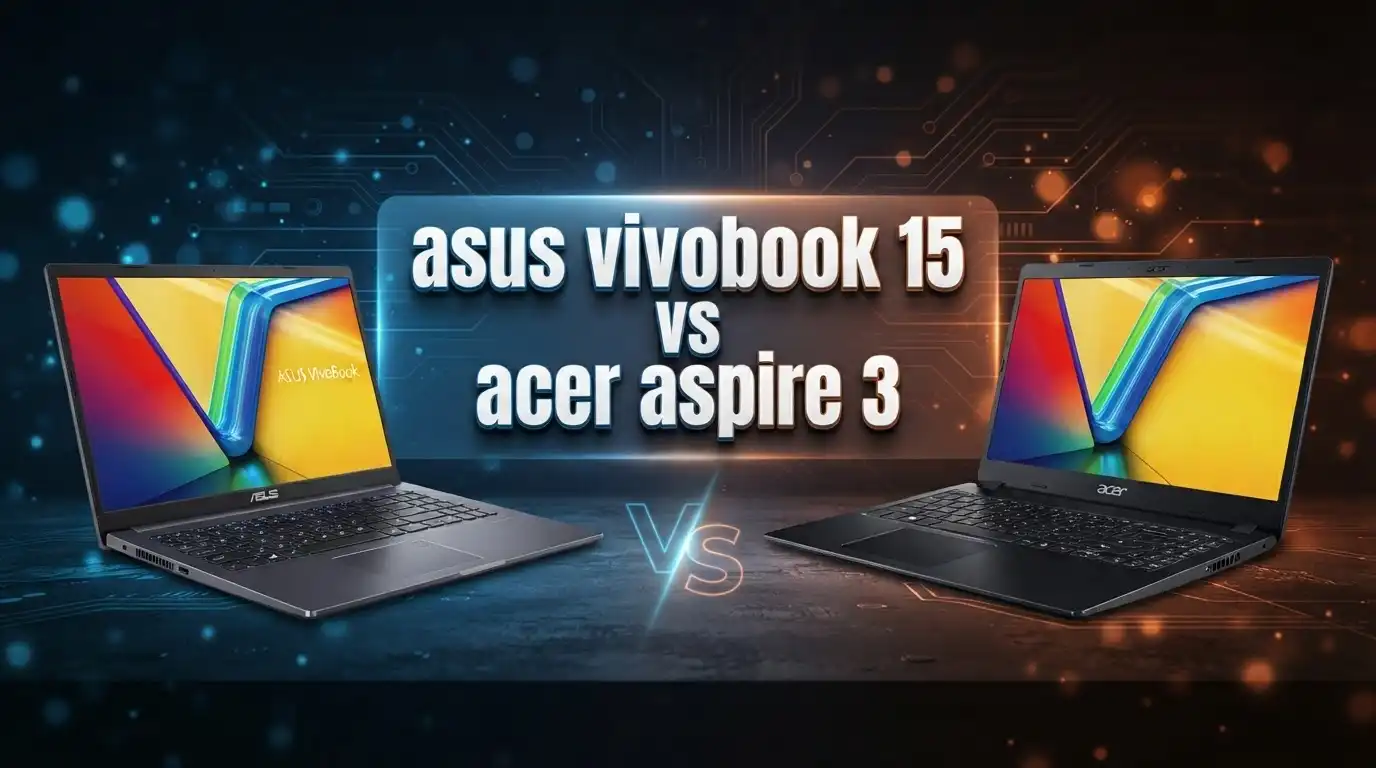
Asus Vivobook 15 vs Acer Aspire 3: Which Budget Laptop Wins?
Buying a budget laptop feels hard because too many models look the same. Two names show up again and again. The Asus Vivobook 15 and the Acer Aspire 3 both sell fast. Both cost less than most laptops. Both promise good value.
But which one deserves your money? That is the real question. You want a laptop that starts fast, lasts long, and handles daily work. You do not want to overpay. You also do not want to regret your choice after one month.
This post breaks down both laptops in plain words. We compare the screen, speed, battery, build, and price. We tested the facts and pulled the real specs. By the end, you will know which laptop fits you best.
In a Nutshell
- The Asus Vivobook 15 uses stronger Intel processors like the Core i5 and Core i3. It handles multitasking and light work better. It is the faster laptop for most buyers.
- The Acer Aspire 3 uses AMD Ryzen chips and costs less. It is the cheaper laptop and a smart pick for tight budgets and basic tasks.
- Both laptops use a 15.6 inch Full HD 1920 x 1080 display. The Vivobook screen looks slightly brighter and cleaner in daily use.
- The Vivobook 15 offers more RAM and storage options, often 16GB RAM and 512GB SSD. The Aspire 3 often ships with 8GB RAM and smaller storage.
- The Acer Aspire 3 weighs less and stays cool during light tasks. The Vivobook feels more solid and premium in the hands.
- For students and home users, the Vivobook 15 gives better long term value. For pure savings, the Aspire 3 wins on price.
Head to Head Comparison Table
This table puts both laptops side by side. Use it for a fast look at key specs and price.
| Feature | Asus Vivobook 15 | Acer Aspire 3 |
|---|---|---|
| Display | 15.6″ FHD 1920 x 1080 | 15.6″ FHD 1920 x 1080 IPS |
| Processor | Intel Core i5-1235U / i3 | AMD Ryzen 3 7320U / Ryzen 5 |
| Graphics | Intel Iris Xe / UHD | AMD Radeon Graphics |
| RAM | 8GB to 16GB DDR4 | 8GB to 16GB LPDDR5 |
| Storage | 256GB to 512GB SSD | 128GB to 512GB SSD |
| Battery | 42WHr, up to 8 hours | Up to 8 to 10 hours |
| Weight | 1.70 kg (3.75 lbs) | 1.78 kg (3.9 lbs) |
| Operating System | Windows 11 | Windows 11 |
| Ports | USB C, USB A, HDMI | USB C, USB A, HDMI |
| Price Range | Higher | Lower |
Asus Vivobook 15 Overview

- 【Intel Core i5 1334U 10-Core Processor for Professionals】 Boost your productivity with...
- 【FHD IPS Display for Immersive Visuals】 The 1920 x 1080 resolution on this ASUS Laptop...
Last update on 2026-07-19 / Affiliate links / Images from Amazon Product Advertising API
The Asus Vivobook 15 is a slim laptop made for daily work and study. It uses Intel processors from the Core i3 and Core i5 range. The Core i5-1235U model handles multitasking well. You can open many browser tabs, run Office apps, and stream video at the same time.
The design looks clean and modern. The chassis feels light at 1.70 kg. You can carry it in a bag with no trouble. The lid opens with one hand. The hinge feels firm and stable.
The keyboard is a strong point. Keys have good travel and a backlit option on many models. Typing long documents feels comfortable. The trackpad is wide and smooth.
Asus adds useful ports too. You get USB C, USB A, and HDMI. This means you can connect a monitor, mouse, and drive without a dongle. The laptop also supports WiFi 6 and Bluetooth 5.2 for fast wireless links.
The Vivobook 15 aims at buyers who want speed and comfort without a high price. It fits students, home users, and office workers. The Intel chip gives it an edge in raw performance over many rivals in this class.
Acer Aspire 3 Overview

- Purposeful Design: Travel with ease and look great doing it with the Aspire's 3 thin...
- Ready-to-Go Performance: The Aspire 3 is ready-to-go with the latest AMD Ryzen 3 7320U...
Last update on 2026-06-17 / Affiliate links / Images from Amazon Product Advertising API
The Acer Aspire 3 is one of the best selling budget laptops on the market. It focuses on low price and simple daily use. Most models use AMD Ryzen chips like the Ryzen 3 7320U or Ryzen 5 7520U.
The Ryzen 3 model runs smooth for basic tasks. You can browse the web, write emails, and watch videos with ease. The AMD Radeon graphics handle light photo edits and casual play.
The build is plain but solid. The plastic body feels sturdy for the price. The laptop weighs around 1.78 kg. It stays cool and quiet during normal work.
The Aspire 3 uses a 15.6 inch Full HD IPS display. The IPS panel gives better viewing angles than cheaper TN screens. Colors look decent for movies and browsing.
Acer keeps the ports practical. You get USB C, USB A, and HDMI. WiFi 6 support keeps your connection fast. Battery life reaches up to 8 to 10 hours on light use.
The Aspire 3 targets buyers who want the lowest price for real daily use. It suits first time laptop owners, kids, and anyone on a tight budget. It proves you do not need to spend much for a working laptop.
Design and Build Quality
Both laptops use plastic bodies. This keeps the price low. But they feel different in the hand.
The Asus Vivobook 15 feels more premium. The surface has a clean finish. The lid resists flex better than most budget rivals. It looks like a laptop that costs more than it does.
The Acer Aspire 3 feels basic but honest. The plastic is thicker in places. There is some flex on the lid. Still, it holds up well for daily carry and school use.
Weight matters for people who travel. The Vivobook is slightly lighter at 1.70 kg. The Aspire 3 sits close at 1.78 kg. You will not feel a big gap in a backpack.
Both laptops open flat or close to flat. This helps when you share your screen. The hinges feel firm on both. Neither wobbles during typing.
Color options differ by store. The Vivobook comes in silver, blue, and black shades. The Aspire 3 often comes in silver or black. Both keep a simple, work friendly look.
For build quality, the Vivobook 15 takes a small lead. It feels more solid and looks more modern. But the Aspire 3 still delivers strong value for its lower price.
Display and Screen Quality
Screen quality shapes your daily comfort. Both laptops use a 15.6 inch Full HD 1920 x 1080 panel. That is a good size for work and video.
The Acer Aspire 3 uses an IPS panel on most models. IPS screens give wide viewing angles. Colors stay steady when you tilt the screen. This helps when two people watch together.
The Asus Vivobook 15 also offers bright, clear panels. Many models use IPS type displays too. The screen looks crisp for text and web pages. Some versions add a touchscreen option.
Brightness is fine on both for indoor use. Neither screen gets very bright outdoors. Direct sunlight washes out the image on both. This is normal at this price.
The bezels are thin on both laptops. This gives more screen space. The Vivobook has a slightly larger screen to body ratio on some models.
For most buyers, both screens look good enough for daily tasks. If you want a touchscreen, check the exact Vivobook model. For sharp movies and browsing, both panels deliver clear, pleasant results.
Top 3 Alternatives for Asus Vivobook 15 and Acer Aspire 3

- 【High Speed RAM And Enormous Space】16GB high-bandwidth RAM to smoothly run multiple...
- 【Processor】AMD Ryzen 5 5500U Processor (6 Cores, 12 Threads, 8MB L3 Cache, Clock...
Last update on 2026-07-19 / Affiliate links / Images from Amazon Product Advertising API

- Ultra slim and portable; AMD ryzen 7 5700u processor (1.80 ghz, up to 4.30 ghz max boost...
- 15.6in full high definition (1920x1080) ips comfyview; Acer true harmony high performance...
Last update on 2026-07-19 / Affiliate links / Images from Amazon Product Advertising API

- Powerful & Efficient: With the power of the AMD Ryzen 5 7430U and the AMD Radeon Graphics...
- Crystal Clear Screen: See the beauty of the world from the comfort of your laptop through...
Last update on 2026-07-19 / Affiliate links / Images from Amazon Product Advertising API
Performance and Speed
Speed is where these laptops split apart. The chips inside decide how fast each one feels.
The Asus Vivobook 15 uses Intel Core i5 and i3 chips. The Core i5-1235U has 10 cores. It handles many tasks at once with ease. You can run Office, Chrome, and Zoom together with no big slowdown.
The Acer Aspire 3 uses AMD Ryzen 3 or Ryzen 5 chips. The Ryzen 3 7320U has 4 cores. It runs daily tasks well. But it can slow down under heavy multitasking.
For basic work, both feel smooth. Web browsing, email, and video all run fine. The gap shows when you push harder. Photo edits and many tabs favor the Intel Vivobook.
Both laptops use fast SSD storage. This means quick boot times and fast app loads. Windows 11 starts in seconds on both.
RAM affects speed too. The Vivobook often ships with 16GB. The Aspire 3 base model often has 8GB. More RAM means smoother multitasking on the Vivobook.
For gaming, neither laptop is built for heavy play. Both handle light and old games only. For raw speed and daily power, the Vivobook 15 wins this round.
Battery Life and Charging
Battery life keeps you working away from a plug. Both laptops last a full work session on light use.
The Asus Vivobook 15 uses a 42WHr battery. It lasts around 7 to 8 hours on web browsing. Video playback drains it a bit faster. It supports fast charge on many models.
The Acer Aspire 3 reaches up to 8 to 10 hours on light tasks. The AMD chip is power efficient. This helps the Aspire 3 last a bit longer in some tests.
Real life battery depends on use. Bright screens and heavy tabs drain both faster. On a mixed day of work, both reach most of a shift.
Charging is simple on both. They use a barrel or USB C charger by model. Fast charge fills the battery quickly during a short break.
For pure battery life, the Aspire 3 has a small edge thanks to its efficient AMD chip. But the Vivobook stays close and adds fast charge support. Both serve students and workers who move around.
Keyboard, Trackpad, and Typing
A good keyboard makes daily work easy. Both laptops offer full size keyboards with a number pad.
The Asus Vivobook 15 keyboard feels crisp. Keys have solid travel. Many models add a backlight. This helps you type in low light. The layout feels natural and roomy.
The Acer Aspire 3 keyboard is comfortable too. Keys feel a bit softer. Some models skip the backlight at the base price. The number pad helps for data entry and spreadsheets.
Trackpads matter for people without a mouse. The Vivobook trackpad is wide and smooth. Gestures work well. Clicks feel firm and clear.
The Aspire 3 trackpad works fine for daily use. It is a touch smaller on some models. It tracks well and supports Windows gestures.
Typing long reports feels good on both. Neither keyboard feels cramped. The extra number pad is a bonus for both.
For typing comfort, the Vivobook 15 edges ahead with its backlight and crisp keys. But the Aspire 3 stays close and works well for school and office tasks.
Ports and Connectivity
Ports decide what you can plug in without extras. Both laptops cover the basics well.
The Asus Vivobook 15 offers USB C, USB A, and HDMI. You can connect a monitor, mouse, and drive at once. It supports WiFi 6 and Bluetooth 5.2. This means fast wireless and stable links.
The Acer Aspire 3 also gives USB C, USB A, and HDMI. You get enough ports for daily gear. It supports WiFi 6 too. Bluetooth keeps your headset and mouse connected.
Both laptops let you plug in an external monitor. The HDMI port makes this simple. This is useful for a home office setup.
Both include a headphone jack. This helps for calls and music. Card reader support varies by model, so check the listing.
WiFi 6 on both means faster downloads. Video calls stay smooth on a good network. For connectivity, both laptops match closely. You will not miss key ports on either one. The choice comes down to speed and price instead.
Storage and Upgrade Options
Storage space shapes how many files you can keep. Both laptops use fast SSD drives.
The Asus Vivobook 15 often ships with 256GB to 512GB. Higher models add more space. Some units allow RAM and SSD upgrades. This helps you extend the life of the laptop.
The Acer Aspire 3 base models start at 128GB. Higher models reach 512GB or 1TB. Some units allow an SSD or RAM upgrade later. Always check the exact model first.
More storage means more room for photos, files, and apps. A 512GB drive suits most home users. A 128GB drive fills up fast for heavy users.
Upgrade paths matter for long term value. If you can add RAM later, the laptop lasts longer. Both brands allow this on select models.
SSD speed keeps both laptops fast. Boot times stay short. Apps load quickly on both. For storage and upgrades, the Vivobook 15 often gives more out of the box. But the Aspire 3 offers larger drives on higher trims for a low price.
Value for Money
Value means what you get for your cash. Both laptops score well here, but in different ways.
The Acer Aspire 3 wins on pure price. It is one of the cheapest full size laptops you can buy. For basic tasks, it gives strong value. First time buyers love the low cost.
The Asus Vivobook 15 wins on features per dollar. You pay a bit more. But you get a faster Intel chip and more RAM. This makes it a smarter long term buy for many users.
Think about how long you will keep the laptop. A cheap laptop that slows down fast may cost more later. A slightly pricier laptop that lasts saves money over time.
Both brands hold decent resale value. Asus and Acer are trusted names. Parts and support are easy to find.
For a tight budget today, the Aspire 3 gives the best price. For better speed and a longer life, the Vivobook 15 gives the best value. Your choice depends on your budget and your plans.
Final Verdict: Which One Should You Buy?
Both laptops are strong picks. The right one depends on your needs and budget.
Choose the Asus Vivobook 15 if you want more speed. It suits students, office workers, and home users who multitask. The Intel chip, extra RAM, and better build make it the smarter long term buy. Pick this if you can spend a little more.
Choose the Acer Aspire 3 if you want the lowest price. It suits first time buyers, kids, and light users. It handles web, email, and video with ease. Pick this if you want a working laptop for the least money.
In short, the Vivobook 15 is the better performer. The Aspire 3 is the better bargain. Neither choice is wrong. Both give solid daily use for years.
Match the laptop to your work. Heavy multitasking points to the Vivobook. A tight budget points to the Aspire 3. Both brands stand behind their products with good support.
Frequently Asked Questions
Is the Asus Vivobook 15 better than the Acer Aspire 3?
The Vivobook 15 is faster for most tasks. It uses stronger Intel chips and more RAM. The Aspire 3 costs less and works well for basic use. The better choice depends on your budget and needs.
Which laptop is cheaper, the Vivobook 15 or Aspire 3?
The Acer Aspire 3 is cheaper in most cases. It is a top pick for tight budgets. The Vivobook 15 costs a bit more but adds speed and features.
Are these laptops good for students?
Yes, both laptops suit students well. They handle Office, browsing, and video calls with ease. The Vivobook 15 is better for heavy multitasking. The Aspire 3 is better for a small budget.
Can these laptops run games?
Both laptops handle light and old games only. They do not have gaming graphics cards. You can play casual titles but not heavy modern games.
How long does the battery last on each laptop?
The Vivobook 15 lasts around 7 to 8 hours on light use. The Aspire 3 lasts up to 8 to 10 hours. Real life battery depends on your tasks and screen brightness.
Can I upgrade the RAM or storage?
Some models allow RAM and SSD upgrades. This varies by exact model. Check the listing before you buy if upgrades matter to you.
Which laptop has a better screen?
Both use 15.6 inch Full HD screens. The Aspire 3 uses an IPS panel with wide angles. The Vivobook 15 offers bright, clear panels and a touchscreen on some models.